
Kenner Previous Resident Sources
Different records answer different parts of an address history. Deeds identify parties to a transfer. Tax rolls name assessed owners. Maps date the building and street pattern. Directories, school records, and newspapers can suggest who used an address. None is a complete roster of previous residents, so the strongest result is a chain of dated sources that agree.
| Source | Years It Covers | Where Held | What It Shows |
|---|---|---|---|
| Mortgage and conveyance images | 1825-present, as described | Jefferson Parish Clerk / JeffNet | Parties, instruments, and legal descriptions |
| Electronic land index | 1967-present | eClerksLA and JeffNet | Name, date, document, and book/page leads |
| Assessment rolls | JeffNet 1992-present; current assessor system | Jefferson Parish Assessor | Assessed owner, parcel, values, and sale fields |
| Sanborn map sets | 1926 and 1939 | Library of Congress | Buildings, blocks, streets, and map-era use |
| Regional city directories | 1805-1945 | LSU and library leads | Dated name and address snapshots |
| School census | 1927 | Jefferson Historical Society | School-age household leads |
| Newspaper archive | 1837-2017 title range | Jefferson Parish Library | Obituaries, notices, names, and events |
| Historical death search | 1911-1975 microfilm plus varying earlier coverage | Louisiana State Archives | Death date, place, age, and certificate lead |
Start with the newest reliable identifier. For a standing house, that is usually the parcel number and legal description. For a family story, it may be a directory year or obituary address. Always save the record date, source, page or instrument number, and the exact name form.
Anchor Past Kenner Residents
The Jefferson Parish Assessor Parcel Search accepts an owner, property address, parcel number, or subdivision with block and lot. Search the Kenner street address first. Then record the parcel number, physical address, ward, subdivision, block, lot, legal description, assessed owner, mailing address, and visible sale or deed fields.
Physical and mailing addresses are separate. The Assessor's address-change form proves that distinction by asking for the property location or legal description as well as old and new mailing addresses. A homestead indicator is a tax and owner-use clue, not a list of everyone who lived there. These limits keep an owner record from being mislabeled as a household record.
Open the map from the parcel card or find the property in JeffMap. Its parcel, address-point, subdivision, building, street, and city-boundary layers help confirm that the legal description matches the intended place. Save a dated map view, but treat it as location evidence rather than proof of occupancy.
Note: A parcel number and legal description usually survive address wording changes better than a street label alone.
Reverse Kenner's Deed Chain
Jefferson Parish splits land research between a free index and a paid image system. Search eClerksLA first for the land-record name and date lead. Use JeffNet when an image, older material, or fuller access is needed. The electronic mortgage and conveyance index is described from 1967 forward, while image and older index material is described back to 1825.
- Copy the current assessed owner and full legal description from the parcel card.
- Search that owner as grantee, the receiving party, and locate the purchase instrument.
- Record the seller or grantor, document type, filing date, instrument number, book/page, and legal description.
- Search that seller as a grantee in an earlier date window. Repeat while the parcel description stays consistent.
- At the electronic boundary, request older books or images through the Clerk counter, JeffNet, State Archives microfilm guide, or FamilySearch catalog.
- Grantor and grantee
- The grantor gives an interest; the grantee receives it.
- Chain of title
- The linked series of recorded transfers for the same property.
- Legal description
- The formal subdivision, square, block, lot, or boundary wording that identifies land.
- Instrument
- A recorded document such as a sale, mortgage, release, donation, correction, or judgment.
A deed party is not always an occupant. Mortgages, releases, successions, donations, plats, and corrections serve different purposes. If the lot description changes, pause and find the plat or correction that connects the two forms.
Kenner Index Before Images
The free index and the paid image service are complementary. The eClerks guide shows name, date, parish, and record-set controls. Its results can point to instrument details without buying an image at the first step. JeffNet adds land images and court activity through 24-hour or monthly access arrangements.
| Route | Best Use | Limit |
|---|---|---|
| eClerksLA | Find names, dates, record sets, and index references | An index is not the full instrument |
| JeffNet | Inspect available land images and broader clerk records | Paid access and coverage windows apply |
| Clerk counter | Request inspection, copies, and older books | Exact book and image availability must be confirmed |
| Archives or catalog | Continue before the electronic boundary | Microfilm and viewer restrictions vary |
This order saves cost and reduces wrong-document pulls. An index result is a pointer. Read the actual instrument before accepting a relationship, legal description, or transfer type.
Map Previous Kenner Addresses
Kenner's 1926 Sanborn set has four sheets, and the 1939 set has five. The maps can show street names, house or block numbers, building footprints, construction, and use. They help answer whether a structure stood on the site and how the block looked at a set time.
Read the title, key, legend, and sheet number. Compare the lot shape and nearby streets with today's parcel map. Do not turn a map label into an occupant claim. The Sanborn layer describes the built place, while a directory, census, deed, or newspaper ties a person to a date.
A modern parcel may have older lives under Cannes Brulee, Kennerville, Oakland, Belle Grove, Pasture, a streetcar-era address, or a subdivision lot. Keep a research card with the historical place name, street or legal description, Sanborn sheet, directory year, deed date, parcel number, and current map date.
Kenner Past Household Snapshots
Ownership is only one layer. A directory can place a name at an address for one publication cycle. The 1927 Jefferson Parish School Census can supply a child, school, or household lead. Newspaper notices may connect relatives, a church, a business, or a former street. The historical collections and their limits are detailed on the Kenner city directories page.
- Choose a deed or map date and find the nearest available directory year.
- Copy the address and name exactly, including abbreviations and spelling.
- Check the nearest public census schedule and the 1927 school census when relevant.
- Search the newspaper archive with the name and street together, then with each alone.
- Use death, probate, and cemetery sources to test why a name disappears.
Absence does not prove a move or death. A volume may omit the household, use another place name, list a business address, or cover nearby communities unevenly. Confirm previous residents with at least one independent dated record.
Lawful use. Research Kenner past residents for house history, family history, estate work, or personal curiosity. Never use an address trail to track, harass, or harm a living person.
Close Kenner Resident Trails
The Louisiana State Archives historical death search is a useful endpoint for a former resident lead. Research notes describe 1911 through 1975 death microfilm plus earlier parish coverage that varies.
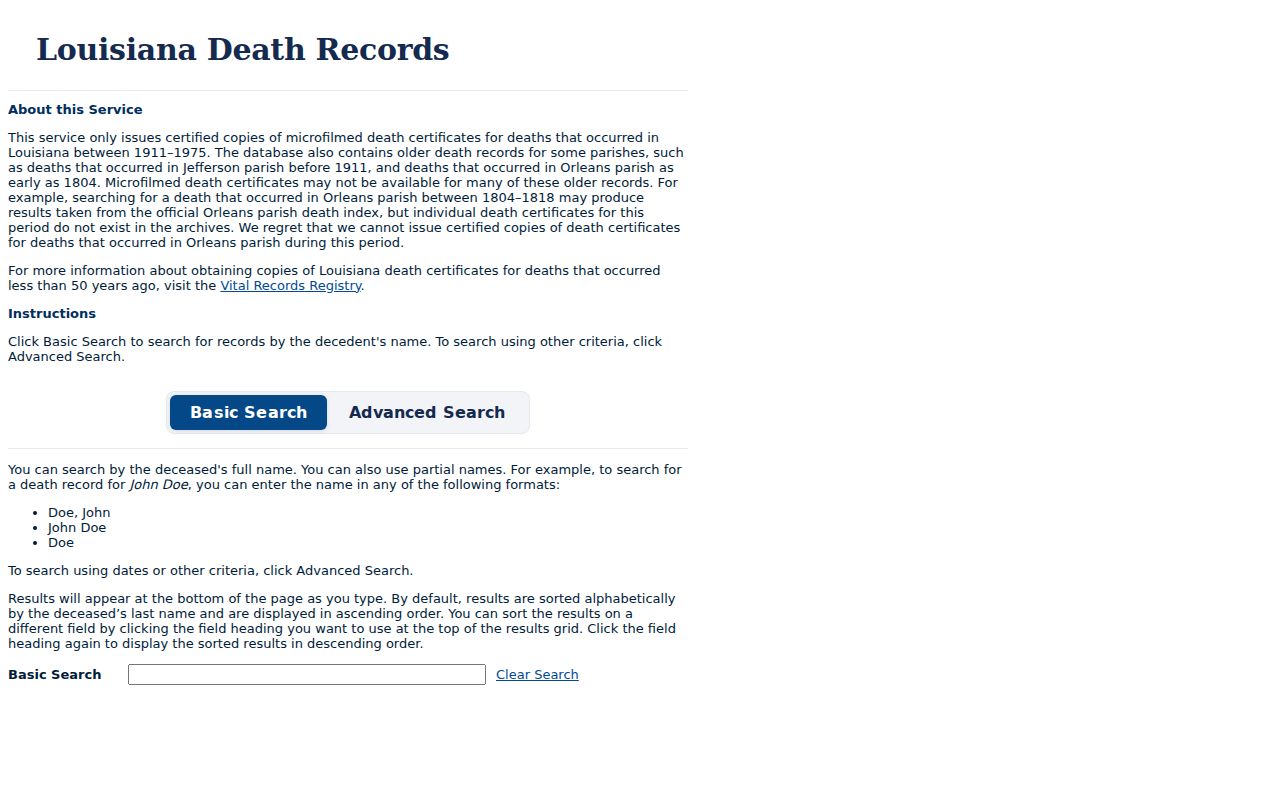
A result can supply a date, place, age, and certificate lead. Match it against the name, address, relatives, and newspaper notice before treating two similar names as the same person.
The Louisiana Department of Health vital records guidance explains when older records transfer to the Archives and when newer records remain closed.
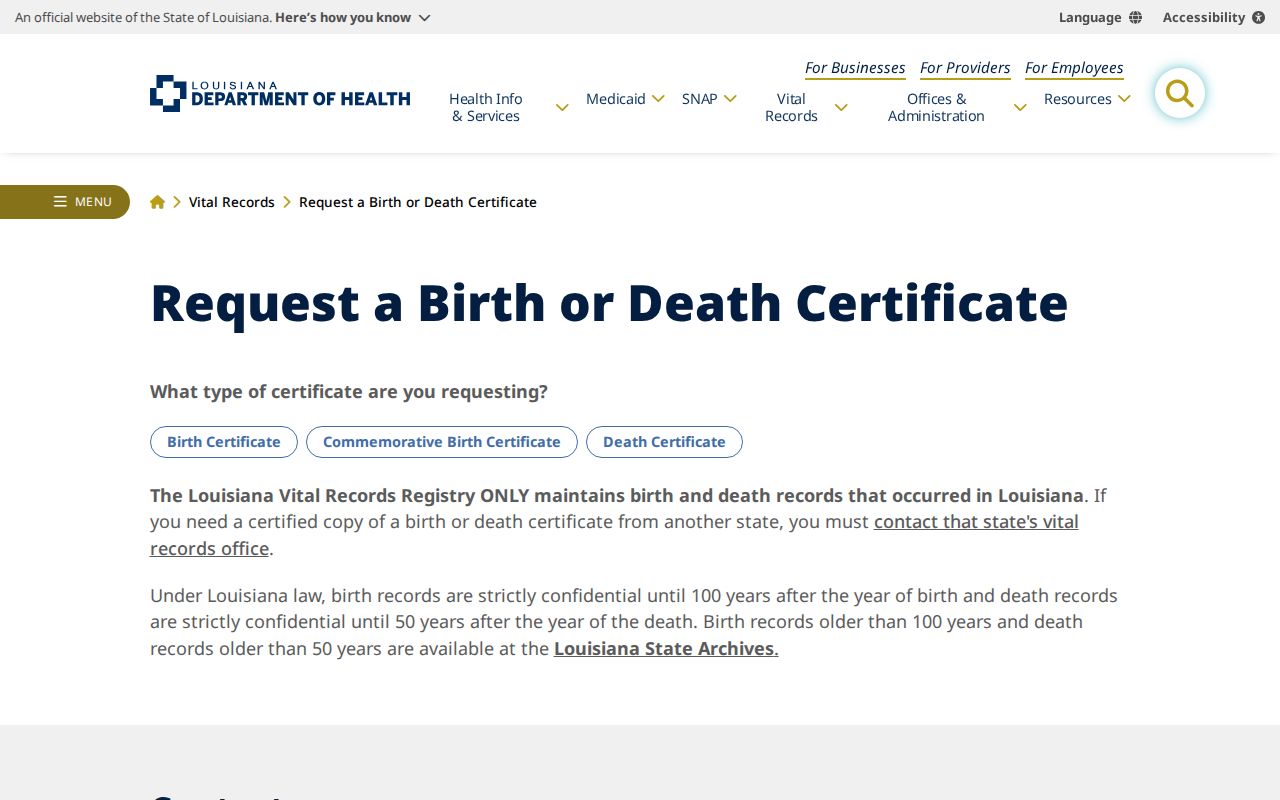
Birth records are confidential for 100 years after the birth year, and death records for 50 years after the death year. Eligible requests for closed records require the proper application and identification. Those rules make an obituary or index a lead, not a substitute for an official certificate.
Kenner's Belle Grove and Love & Charity cemeteries appear in the Louisiana Cemetery Board listings. The Board says cemeteries, not the Board, keep burial records. Contact the cemetery custodian, then compare the burial-book response with the obituary and death index.
Kenner's Older Custody Trail
Kenner city history says residents returned a charter and funds in 1908 and transferred records to the Parish. That statement is a rare clue about where old municipal material might have gone. No itemized official inventory was found, so it should not be described as proof that a specific book survived or disappeared.
Ask the Kenner City Attorney or clerk, Jefferson Parish Clerk of Court, Louisiana State Archives, and Jefferson Historical Society about tax books, minutes, registers, charter papers, and correspondence. Search catalogs under both Kenner and Jefferson Parish. The city regained charter status in the next decade, which may have changed series titles or custody.
The absence of a portal result is not evidence of record loss. Older material may require in-person inspection, a written public-record request, microfilm, or a manuscript search. State the access path and the uncertainty in research notes.
Note: Cite the 1908 statement as a city-history transfer account unless a custodian confirms the exact record series.
Verify Kenner Previous Residents
Rank evidence before writing a house history. A dated official document with an identifier carries more weight than an index. A parcel map confirms place, not a person. A directory or newspaper gives valuable context, but it can lag, omit a name, or describe a business site. An unverified lead belongs at the bottom.
- Direct official record with a date and document identifier
- Official index that points to the document
- Official parcel, map, or ZIP evidence
- Established library or historical image with a page and year
- Newspaper or directory context checked against another source
- Unverified lead that still needs a custodian request
This evidence ladder prevents a deed party, map label, or directory line from becoming a false claim about who lived here before. Keep citations beside each statement, and mark conflicts instead of smoothing them away.