
Kenner City Directory Shelves
Kenner has no single shelf that runs year by year. The regional shelf does the work instead. New Orleans directories and telephone books preserve Kenner names. Parish histories do too, and so do school records. Newspapers round out the set. Confirmed holdings and promising leads stay separate in the table. A regional title never promises every Kenner household. That limit is the point of the split.
| Collection | Years | Where Held | Access |
|---|---|---|---|
| New Orleans city directories | 1805-1945 | LSU genealogy collections | Check catalog and holdings |
| New Orleans directory description | 1851-1935 | Jefferson Parish Library resource description | Confirm current branch holdings |
| U.S. city directory inventory | Mainly 1861-1960 | Library of Congress | Microfilm inventory; locality varies |
| U.S. telephone directories | 20th century, reel dependent | Library of Congress | Kenner is indexed as a locality; scans are not online |
| Woods Directory | 1911-1913 | Library of Congress | Free scans; New Orleans focus |
| Parish historical records | 1920s onward, item dependent | Jefferson Historical Society | Open landing pages; item access varies |
Kenner's publisher list is a documented gap. Search catalogs under Kenner, Kennerville, Jefferson Parish, telephone directory, and nearby New Orleans titles. Ask whether an item sits on a shelf, on microfilm, or inside a database. Write down the title, year, page, and call number.
The Library of Congress telephone directory inventory lists Kenner among Louisiana localities. Louisiana, though, lacks online phone-book scans in that guide. The request narrows as a result. Ask for the reel and locality span. Then check whether Kenner appears as its own section or inside a regional volume.
Kenner Directory Help at JPL
North Kenner Library is the place to turn for a Kenner city directory volume. This applies when it has not been scanned for free public use. The branch sits at 630 West Esplanade Avenue, and its number is 504-736-8730. Hours run 9 a.m. to 9 p.m. Monday through Thursday, then 9 a.m. to 5 p.m. Friday and Saturday. Services include public computers, Wi-Fi, study rooms, and a Spanish collection.
Come prepared with a surname, a rough year, and every place name your family used. Kenner itself appeared under different names over time. So offer Kenner, Kennerville, and Jefferson Parish. Add a street or subdivision if you know one. The library's reference categories cover directories, genealogy, history, and New Orleans or Louisiana materials. Treat that page as a doorway rather than a full inventory. Many volumes sit on the shelves beyond it.
Historical newspapers can fill gaps the street directory leaves behind. The library holds New Orleans Times material from 1865 through 1878. It also has New Orleans Weekly Times from 1865 through 1867. Times-Picayune material runs from 1837 through 2017. Current material from 2017 forward is there too. Search a full name together with a street address. Then check the actual image, because optical character recognition often stumbles on old type.
Note: Ask staff to confirm the exact title and year before you travel. The online reference categories leave many volumes unlisted.
Decode a Kenner Directory Entry
A scanned 1912 Woods Directory page models careful transcription. One entry names Joseph Smith Son, trade carpenter, at 1812 Seventh Street. Another lists Beauregard Pressing Club, with Peter Capponi as proprietor, at 634 North Rampart Street. Both come from New Orleans, not Kenner. The fields still teach plenty.
| Name | Copy the person or organization exactly as printed. |
|---|---|
| Role | Record the trade, profession, business type, or proprietor note. |
| Address | Keep the printed street form and distinguish a business site from a home. |
| Source | Save the volume title, year, page, and image link. |
| Context | Read continuation headings and the key before expanding marks. |
- Criss-cross directory
- A later directory section arranged by street or phone number instead of surname.
- Householder index
- An address-led list that may name a person associated with the household.
- Abbreviation key
- The volume's own guide to shortened words and symbols. Save it before interpreting an entry.
A trade listing proves a public tie to a business and address at publication time. It proves nothing about a home address. Keep spelling, punctuation, and accents exactly. Then try a normalized variant, since alphabetical neighbors can hide a relative or a typesetting variation.
Kenner City Directories Online
The Library of Congress Louisiana guide gathers routes into local-history and genealogy collections across the state. It names institutions, not a free Kenner run.
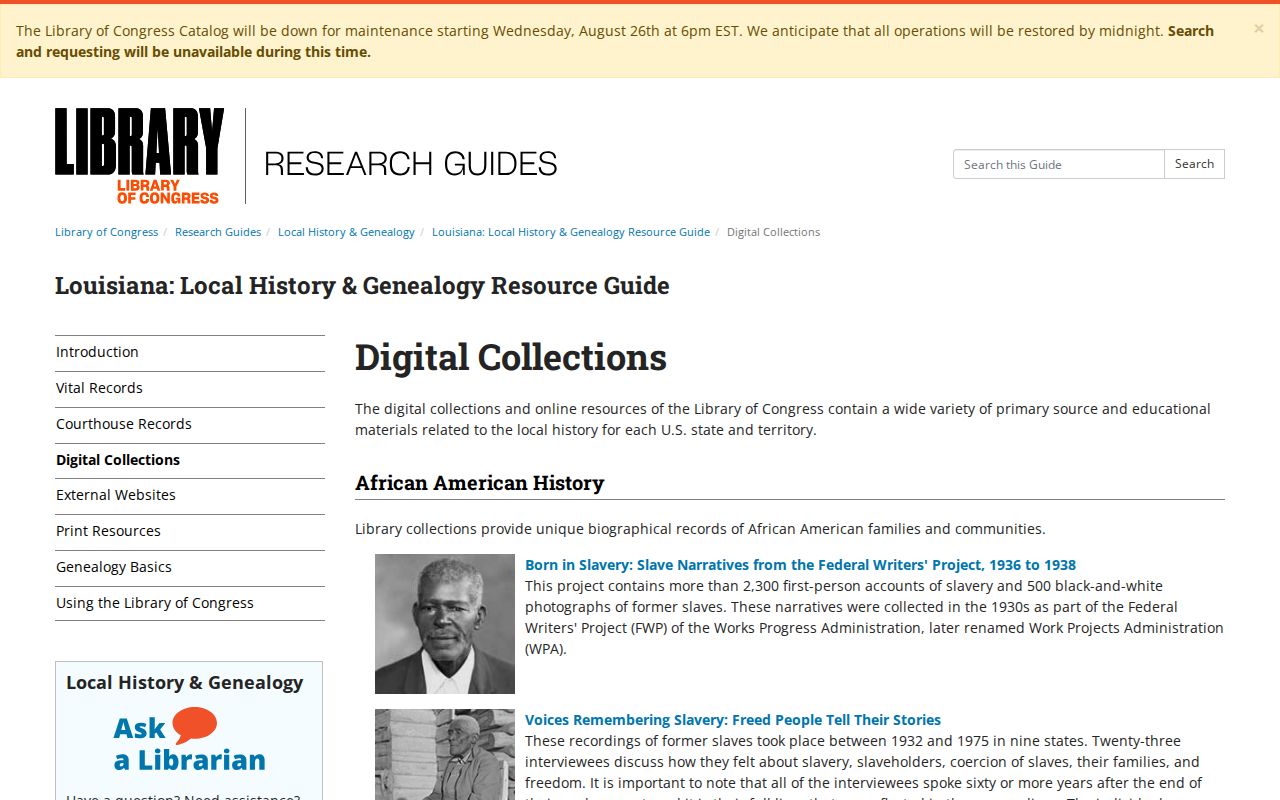
Treat the guide as a bridge. Take an institution name and collection label straight into that repository's catalog. Search Kenner, Kennerville, a surname, or a street. If no scan exists, note the title and request the reel or page.
The Library of Congress directory data package opens collection metadata for directory exploration. Metadata can confirm a locality with no images online.
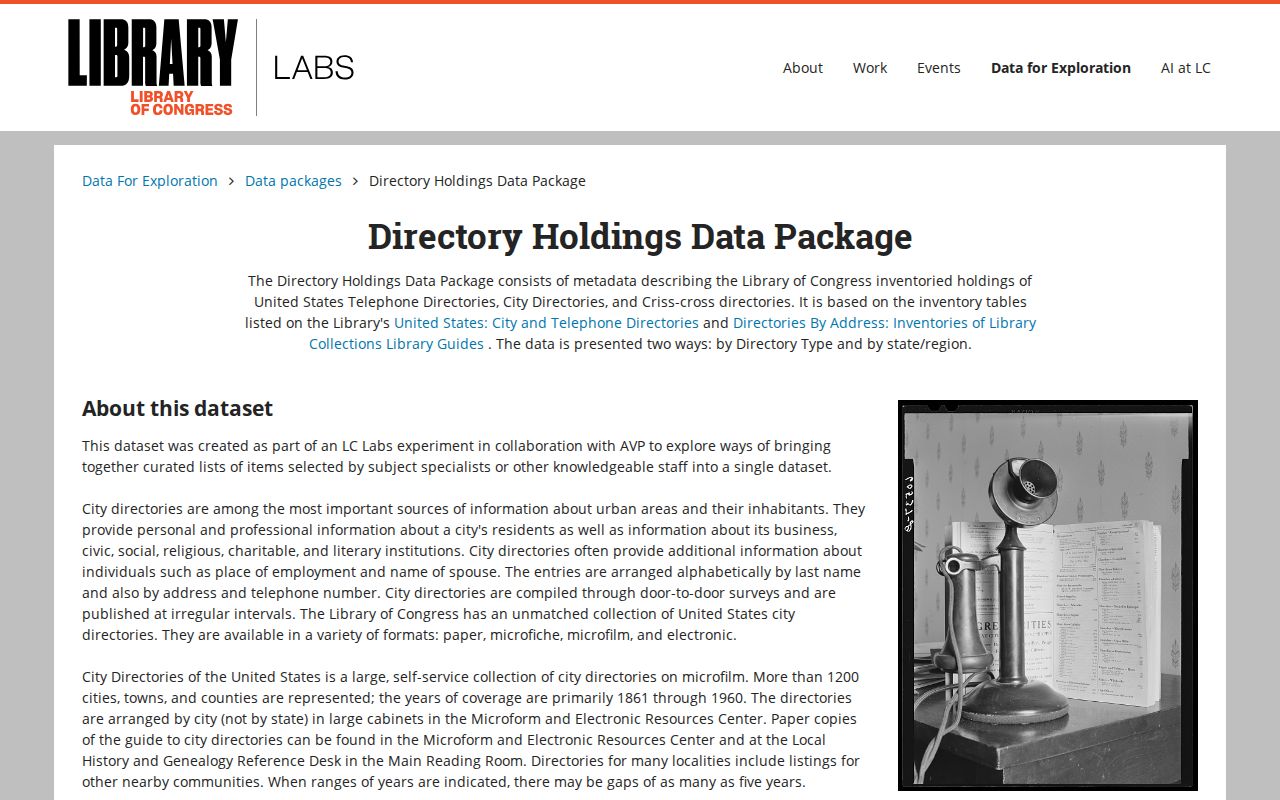
Use the metadata result to frame a precise library request. A locality label is an aid, not a household record.
Kenner Names Beyond Directories
Between directory years, other Kenner records can fill the silence. The Jefferson Historical Society Virtual Archives list holdings that speak to households and civic life. Among them are a 1927 School Census. Parish court minutes, yearly reviews, a treasurer's book, and video archives are there too. The society also hosts the full 15-volume WPA Historical Records Survey of Jefferson Parish. That survey is a rich companion to any residents directory search.
The school census deserves a close look. It can tie a child, a school, and a family to one moment. Yet it remains a single snapshot. Anchor the name with a city directory entry, a birth or death record, a deed, or a newspaper image. Do this before trusting it fully. Court minutes add legal or civic color, but they do not prove where someone lived.
Church, organizational, and parcel ties lead elsewhere. The LSU Special Collections subject guides point to deeds, personal papers, and correspondence. They also cover residents and organizations across the lower Mississippi Valley. Treat manuscripts as companion evidence. Cite each one by collection, box or item, and date.
Map Kenner Directory Addresses
A printed address can outlive its building. Modern street numbers often refuse to fit an old map. The Library of Congress holds 1926 Kenner Sanborn maps on four sheets. It also holds a 1939 Kenner set on five. These fire-insurance sheets show street names, block and house numbers, footprints, construction, and building use.
Start with the legend and sheet key. Then set the printed directory address against the block shape. Check the streets around it and the building's use. A Sanborn symbol is not a resident index. A label on a building does not prove one person occupied it. The map supplies physical context for the city directory entry, nothing more.
Old place names matter here. Search Cannes Brulee and Cannes Brûlée, Kennerville, Oakland, Belle Grove, and the Pasture plantation names. Two timelines help anchor newspaper and map work. The first is the Orleans-to-Kenner streetcar years, 1914 through 1931. The second is the Moisant Airport milestones of 1940 through 1946.
Note: Record the original place name in your notes, then run the modern form as its own search.
Kenner's 1908 Records Transfer
Kenner's own city history says residents returned a charter and funds in 1908. It also says records passed to the Parish. That account raises a real custody question for old municipal books. It does not show that every record was moved, lost, or preserved. City history publishes no item-by-item transfer inventory.
So ask directly. The Kenner City Attorney or clerk may hold minutes, charter papers, tax books, correspondence, or registers. So may the Jefferson Parish Clerk of Court, the Louisiana State Archives, and the Jefferson Historical Society. Search catalog descriptions under both Kenner and Jefferson Parish. Until an inventory confirms a series, label the lead as a transfer account. That label comes from city history.
This gap is why a dead-end web search ends nothing. Material may sit under parish custody, on microfilm, or inside a manuscript collection. Kenner later regained charter status, becoming a village and then a town in the 1910s. Ask, too, whether a municipal series restarted under a new title after that shift.
Trace Families in Kenner Directories
A city directory works best as one dated step in a longer family trail. Log each appearance. Log each absence too. Then weigh the entries against a census, a deed, a school record, and an obituary. For modern names or addresses, the Kenner resident lookup shows how to verify a person. It does not treat a directory as current proof.
- Find the earliest likely entry. Save the title, year, page, spelling, address, and role.
- Check the next available years. Record moves, new occupations, household changes, and missing years without guessing why.
- Use a criss-cross section when available. Search the street number, then compare the alphabetical listing.
- Pair directory years with public census years and the 1927 Jefferson Parish School Census where the dates fit.
- Test the name and address in the newspaper archive, death index, deed index, and cemetery records.
Disappearance can mean many things. A move, a death, an omission, an unlisted number, publication lag, or a changed place name can all hide a family. An obituary naming relatives, a church, a cemetery, or a former address may close part of the trail. Verify death details through the State Archives index or an eligible certificate request. Remember that cemeteries keep burial books of their own.